Despite a population of over 170 million and the largest economy in Africa, chronic
lack of electricity prevents Nigeria from achieving its potential economic and
social status. The wide gap between
electricity demand and supply adds greatly to the cost of operations by forced
reliance on diesel generators at four times the cost of normal grid power as
well as major lost work-time. From a
personal standpoint, there is a universal reduction in quality of life due to
the lack of dependable electricity to homes and places of work.
 Past
governments have generally responded to this electricity debacle by announcing
new targets for electricity capacity, along the lines of “10,000 MW by the end
of the year”. In the last 15 years,
public money spent in the electrical sector has accumulated to nearly $30
billion and two years have passed since the privatization of the Generation
Companies (GENCOs) and Distribution Companies (DISCOs). Yet
despite these major efforts, the daily electricity distributed remains almost
unchanged between 2500 – 4000MW and Nigerians see little or no improvement. Electrical capacity has physically increased,
only for the owners to discover there is not enough gas to run them. Even if there was enough fuel, as the Vice
President Professor Osinbajo noted recently, the transmission capacity is only
about 5000 MW.
Past
governments have generally responded to this electricity debacle by announcing
new targets for electricity capacity, along the lines of “10,000 MW by the end
of the year”. In the last 15 years,
public money spent in the electrical sector has accumulated to nearly $30
billion and two years have passed since the privatization of the Generation
Companies (GENCOs) and Distribution Companies (DISCOs). Yet
despite these major efforts, the daily electricity distributed remains almost
unchanged between 2500 – 4000MW and Nigerians see little or no improvement. Electrical capacity has physically increased,
only for the owners to discover there is not enough gas to run them. Even if there was enough fuel, as the Vice
President Professor Osinbajo noted recently, the transmission capacity is only
about 5000 MW.
Both
before and after privatization, Nigerian electrical supply has been underpinned
by two sources:
the hydro-power facilities that despite problems
with water level, partly due to global warming, remain a dependable core supplier;
the dependable operation of the two
combined-cycle power plants in the Niger-Delta that belong to two Joint
Ventures (JVs) of the International Oil Companies (IOC) and NNPC.
 These
two IOC/NNPC power plants have been the workhorses of the existing gas-fired
capacity. With the right policy support,
the number and capacity of IOC/NNPC power plants could expand significantly and
continue to play a core role in the nation’s electricity. Importantly, several IOC/NNPC
JVs already have plans and designs in place to increase the capacity of
existing facilities and to build new ones. The merits of the IOC/NNPC JV power plants derive
from several key factors – gas supply certainty, advanced technology, available
financing, and extensive expertise.
These
two IOC/NNPC power plants have been the workhorses of the existing gas-fired
capacity. With the right policy support,
the number and capacity of IOC/NNPC power plants could expand significantly and
continue to play a core role in the nation’s electricity. Importantly, several IOC/NNPC
JVs already have plans and designs in place to increase the capacity of
existing facilities and to build new ones. The merits of the IOC/NNPC JV power plants derive
from several key factors – gas supply certainty, advanced technology, available
financing, and extensive expertise.
First
reliable domestic gas supply continue to be major challenge due to the lack of
gas infrastructure, often poor maintenance, and deliberate vandalism. These IOC/NNPC plants avoid these supply problems
by being located on the oil block that produces the gas, and the operators provide
both the gas supply and the infrastructure to treat and connect the gas to the
power plant, thus allowing uninterrupted supply. Being located within the oil block, on-going
maintenance and security are provided by the operators.
Second,
the IOC/NNPC operators are technologically advanced companies, expert in the
design and implementation of major capital investments. These companies have chosen to use combined
cycle gas technology that use one third less gas to produce a kWh of
electricity – thus reducing both gas needs as well as carbon and local
emissions. While combined-cycle gas
power plants are the international norm, only one other power plant in the
country uses this level of technology. A
priority for the country should be to build the electrical infrastructure to be
in line with best international standards, which allows for major benefits to
economic well-being and long-term competitiveness.
Third,
while many of the new GENCOs have financing constraints, IOC/NNPC JVs have a much
stronger financial balance sheet that allows them to fund new, high-quality investment
in the electrical generation sector.
Indeed to ensure that the electrical capacity can be utilized, some of
these JVs are willing to undertake substantial investments on transmission
facilities to secure that power from these lines reach the grid.
Finally,
these companies have the experience as well as the procedures and capacity
in-place to implement such projects on a timely and reliable basis. They
routinely manage multiple large-scale projects of this magnitude. Given that such projects require
negotiations and contributions from a wide range of international companies
both technical and financial, a large global presence is a distinct advantage.
There
is no easy fix to Nigeria’s power dilemma and a proper response needs to be
wide-ranging and multi-faceted. The
country has moved in the right direction with the Electric Power Sector Reform
(EPSR) Act of 2005 and the creation of the Nigerian Electricity Regulatory
Commission (NERC), have been a major steps.
The privatization process, which saw the emergence of the GENCOs and the
DISCOS, is clearly positive. These
policies have encouraged other meaningful, privately-owned systems, for example
one company in the Delta which has integrated gas supply with transmission infrastructure
and entered into firm contracts with power producers. The on-going initiative on embedded power in
Lagos State is another useful example. The
new owner of one of the GENCOs in Delta State has almost tripled generating capacity within the first six
months of operations, showing that some new entrants can act decisively. Renewables such as solar could have an
important space, if given the right policies and incentives.
Meeting
the electricity demand in the country has to be built on the foundation of a
conductive investment environment that supports and builds a modern, efficient
electrical system. The IOC/NNPC JVs are
one group of private actors that has contributed substantially to the
electrical sector and could contribute substantially more. The Government needs to be pro-active toward
these companies, indeed all companies, in the policies and incentives put in
place to ensure a positive investment framework and ensure that implementation
occurs in the timeliest manner.

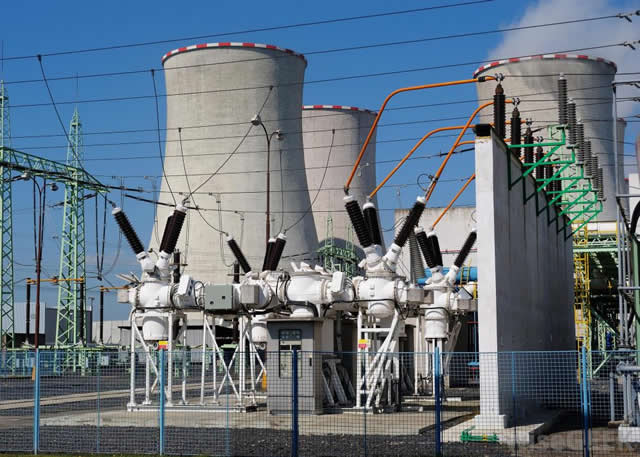 The nation’s power generation is significantly being limited by gas constraints, a development that has driven down electricity supply to households and businesses across the country.


